
Week Four in Iran
a war with no path to victory

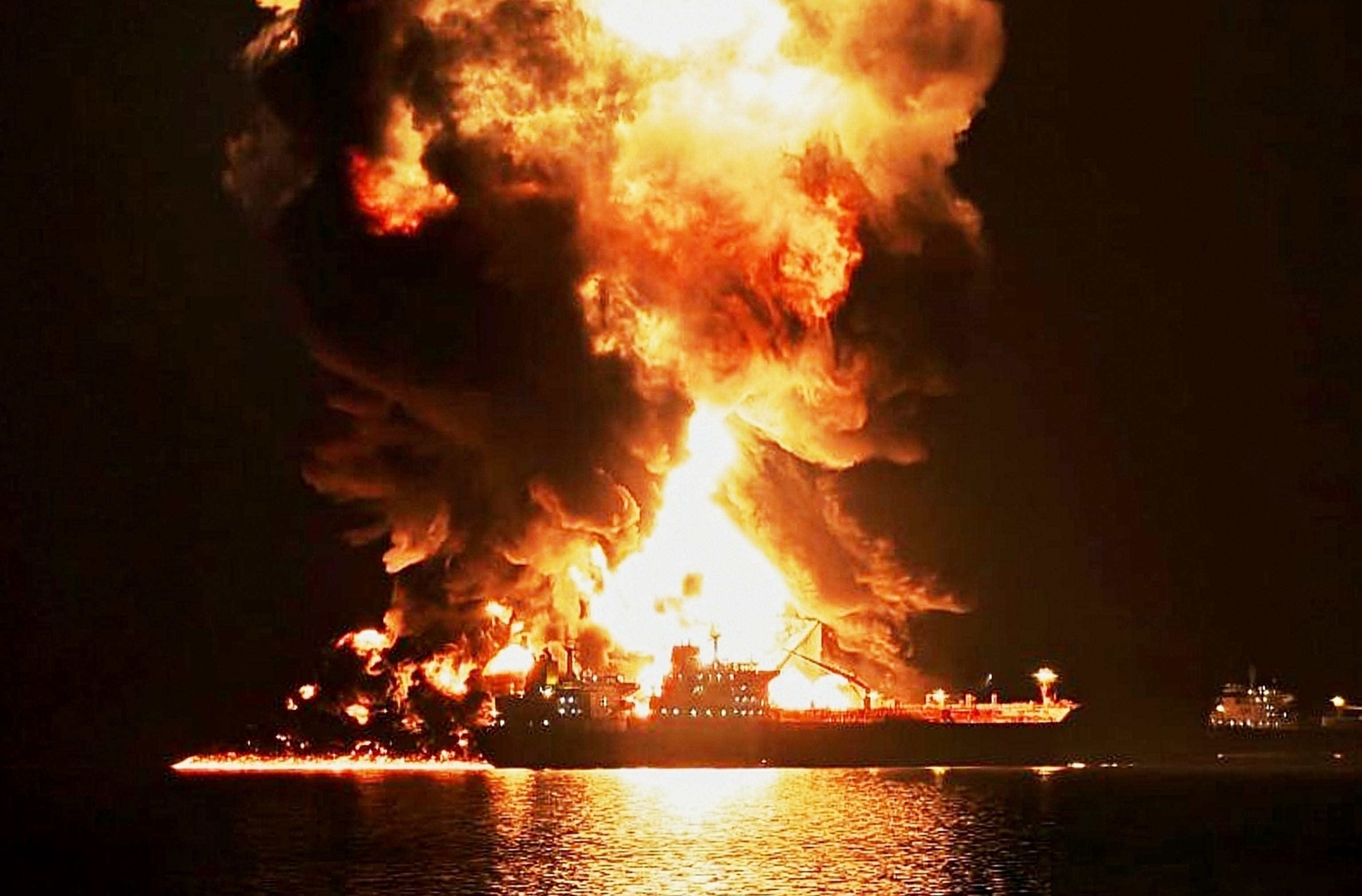
When I published my initial predictions, I explicitly framed them as a model rather than a take. The purpose was not to be correct in every detail, but to outline the structural constraints governing the conflict and allow events to test them. Four weeks in—already beyond the outer bounds of my expected timeline—enough has happened to begin evaluating where that model has held, where it has strained, and where it requires revision.
The core assumptions were straightforward. None of the major actors wanted a general ground war. The United States would rely on air and missile superiority but remain politically constrained from escalation. Iran could not defeat the United States conventionally, but could impose political and economic costs, especially through leverage over Gulf shipping and oil markets. Power, and therefore victory conditions, were asymmetrical: the American win conditions were transformative, the Iranian win conditions are survival and deterrence. However, “transformative” in this case could be misconstrued; Iran is clearly pushing for a lasting settlement, it has the leverage with which to do so, and it should be said that that in itself is transformative.
So far, much of that framework remains intact. The conflict has stayed within the parameters of air and missile warfare, by which Washington cannot accomplish its strategic objectives, whether regime change, denuclearization, or opening the Strait. There are still no American boots on the ground. Iran has absorbed punishment without collapsing. The asymmetry in capabilities remains obvious. It is the intensity and the timeline of the conflict that has broken my expectations. I expected calibrated retaliation, but assumed it would be more symbolic. And this seems to have been the same assumption made by Washington, which clearly has no contingency in place, in a glaring display of oversight. The Iranian response has been calibrated—calibrated to the existential nature of the threat. Commentators have grown accustomed to casually discussing ideas like regime change and demilitarization as though they are trifles, and are shocked that a state threatened with its extinction will take drastic measures to avoid it.
Still, neither Washington nor Tehran are pulling out all the stops. The Iranians have not blown up every tanker and refinery in the Gulf, even though they’ve proven many times over that they certainly could. They could also destroy the entire peninsula as functioning states by targeting the few desalination plants upon which civilization in the region are reliant. But there’s an inherent balancing act at play here. Doing any of this if not utterly necessary would be a diplomatic blunder that could invite further isolation or even retaliation from other states seeking to avoid a (more) catastrophic economic collapse, however it very much exists as a dead man switch that can happen whether Tehran is intact or not. Likewise, the Americans have not engaged in a catastrophic escalation such as blowing up the Iranian energy grid, as doing so would trigger retaliation—including such a dead man switch—that they don’t exactly have an answer to. An assumption that I made was that this would be a sufficient deterrent that would keep escalation relatively constrained, but I no longer think so.
The central tension now is escalation dominance. That these measures haven’t been taken—or that there are no boots on the ground—is still correct, but tenuous, and it is increasingly likely that they will occur. No matter what, the United States is risk averse and wary of a ground war, but the temptation to inch closer towards catastrophic escalation persists because this war has turned into a stalemate and a war of attrition that favors Tehran. Their leverage over the Strait of Hormuz has introduced a strategic asymmetry that Washington cannot easily neutralize. If the coalition forces strike Iranian oil infrastructure, the Iranians strike Gulf oil infrastructure. If the coalition strikes financial infrastructure, so does Iran. The Houthis are likely to enter the war (update: they have), the entirety of civilization in the peninsula could be destroyed. Tehran has a very formidable escalation ladder of its own, and thus there is no decisive leverage to create victory, especially not the initial objectives, which Washington was never closer to achieving than they were on February 28th. Nevertheless, they have been fruitlessly scrambling to find it for the better part of four weeks.
By threatening global energy flows, Tehran has imposed a much steeper time constraint on the conflict. The longer this drags on, and especially the higher it escalates, the greater the economic and political damage. That dynamic creates pressure on Washington to seek a decisive action, but the political outcomes they wanted can’t be achieved through the limited means currently on the table. That leaves two main options: concede defeat, or continue to escalate in search of victory. The error I made initially was assuming that Washington would quickly realize the game isn’t worth the candle and try to extract itself from the conflict, and I had expected Tehran would be receptive to peace. But the reality is that Washington cannot withdraw even if they wanted to, and Tehran doesn’t want to let them.
Tehran has little incentive to pursue peace in the short-term, for the simple fact that it can’t afford to. The US struck Iran eight months ago, and then launched another strike last month—two days ahead of negotiations in Geneva—and killed the Iranian head of state as well as several ranking members of government. This use of negotiations as a screen for military action makes diplomacy difficult, firstly because it establishes Washington as a non-credible negotiator. More saliently, however, if Tehran made peace now, they have absolutely no guarantee that they won’t be back in the same situation in another eight months. So they’re going to make sure that doesn’t happen by leveraging the Strait. Consequently, it is clear now that it is impossible for this situation to resolve in a timely manner.
Needless to say, that decapitation strike is extremely important for understanding the conflict because it established intent concretely up front. No matter what was claimed about American strategic objectives before, how they may shift over time, and how they may differ from the typically narrower operational objectives such as attacking Iranian missile and naval assets, we know that this was what they expected to get out of it. The United States initially sought to intimidate Tehran with the presence of the carrier group, and when that failed it sought to effect regime change through the decapitation strike which has killed the Ayatollah Khamenei.
This was built on a number of fallacious assumptions. The first, which I’ve already covered, is that air power alone was never going to generate this outcome. In spite of how many people both in and outside the Trump administration claimed that the regime had been destroyed after the initial strikes and that a new regime would take power at any moment, regime change has still not occurred and indeed has likely never been a more distant prospect than it was at the start, as the IRGC continues to consolidate power and accrue legitimacy in the face of the existential threat.
The second was believing that Iran would have no safeguard against such a decapitation strike, despite knowing fully well that their chief rival of many decades favors precisely such a strategy. The autonomous response of the Iranian units has demonstrated otherwise, and the strategy which is being carried out is certainly effective. More broadly, however, the assertions that several Iranian figures have made is correct: you can kill individuals, but you cannot kill the entire system and bureaucracy of a country of 93 million people so easily.
Thus, the war that the coalition had hoped for was lost almost immediately when their expectations failed to pan out, and it’s increasingly obvious that there was no contingency in place. Can there be any doubt at this late hour—as the war drags on into its fifth week, the Strait remains closed, the United States lifts sanctions against Russia in a desperate bid to keep the price of oil down, and as every harebrained scheme to create some kind of favorable strategic leverage evaporates—that this is the case? In fact, we have seen the strategic priorities shift—away from denuclearization and regime change towards diminishment of missile and naval assets instead, which provides a more accessible, but strategically hollow exit ramp to an otherwise unwinnable war.
Again, the only options at present are to double down and continue escalating to try and scrape together a victory out of this, or to negotiate a favorable deal with Tehran. Only one of these provides a realistic path towards some kind of resolution to this mess, and is therefore more desirable. The alternative doesn’t guarantee anything, and all of the ideas floating around to are not only unlikely to secure victory, but are extremely risky.
Suppose, for example, that the United States moves ahead on occupying Kharg. Getting there at all would be difficult, as anti-ship missiles and drones make traversing the waters near Iran very dangerous—what further evidence of this is needed than the distance the fleet is keeping from Iran? And it’s unlikely that enough of these assets will ever be neutralized so that the prospect doesn’t carry an unacceptable risk, let alone whether this can be done in a reasonable timeframe. Again, while this is all happening the Strait will remain closed.
But suppose they do land on Kharg, or some other island, which is not entirely implausible. In fact, that would likely be the easiest part. The key assumption this plan or idea of plan rests on is that if the Americans successfully land that it guarantees a victory—that the Iranians will capitulate as a result—but no one is considering what happens if that’s simply not the case, just as they failed to capitulate after the initial decapitation strike. Or if it does succeed at this, but it takes a week or more for Tehran to sue for peace, what happens in that interim period.
How, then, do those troops receive logistical support? How are they going to be protected on an open island fully exposed to not only the missiles and drones, but even more conventional weapons like artillery and mortars? The expression “fish in a barrel” comes to mind. What’s going to happen to them if the oil reserves on the island get hit as collateral—which is extremely likely to happen if the island is contested—and begin to spew toxic fumes? That itself is an unacceptable loss, as Trump’s efforts to keep the price of oil below one hundred dollars per barrel has necessitated getting as much supply into the market as possible, which is why Iranian tankers have been allowed to pass unmolested. With the Russians now banning oil exports, Iran’s supply has that much more weight. In short, there’s no reasonable expectation that such an incursion would succeed either tactically or strategically. Quite the opposite, any incursion into Iran will escalate the war rather than ending it—again, the Iranians have their own escalation ladder—making the inevitable negotiations that much harder, and in fact make it far likelier that even more soldiers would be committed, which is to be avoided.
Something else that is incredibly alarming to me as we flirt with the possibility of an invasion is that it seems that the United States hasn’t learned anything from Ukraine—not only that it blundered itself into exactly the same kind of conflict against an underestimated middle power, albeit one that it cannot fully commit itself to as Russia did, but that it is fighting a very different war than the one that Iran is fighting. This is a war of attrition that favors their strategy of rationing their stockpiles and squeezing international trade. It’s not that Iran isn’t going to catch a beating, but that they’re going to be able to outlast the United States which can’t break this stalemate in a reasonable amount of time
Drones are another apparent blind spot in American tactical thinking. I wouldn’t go so far as to say that drones haven’t entered into tactical thinking at all, that’s clearly not the case, but they haven’t penetrated nearly to the extent that they must. The American military at present is not built to withstand the high losses of materiel in the age of the drone. Defenders of the war in Iran have drawn comparisons to the high American equipment losses during Vietnam, but the difference is that the American military at that time could absorb those losses. Tanks are still needed to achieve breakthroughs, but they are inherently vulnerable to FPV drones that cost a pittance, and that’s unsustainable at the scale a ground war will require. It’s tough to determine what’s true or not when there’s so much lying all around, but if rumors out of southern Lebanon are to be believed then it demonstrates this quite plainly. Again, all this does not bode well for any potential invasion, and moreover I do not believe that the American psyche is sufficiently prepped for the non-stop drone footage of American deaths that have characterized the war in the Ukraine. There is no good reason to chase what’s currently limited to a political loss with what’s likely to be a military loss.
Another reason to expedite an exit is that the tail is wagging the dog, in yet another display of how little control Washington has over the trajectory of the war. The Israelis, operating under a different set of priorities and objectives, continually attempt to escalate the conflict beyond what the United States itself appears to want, particularly against the energy production which Washington views as critical. These actions have predictable consequences, provoking reciprocal Iranian strikes, further intensifying the economic crisis. Most recently, the strikes against Iranian steel production have resulted in retaliation against aluminium plants in the Gulf, which account for nearly ten percent of the global supply. Because the United States can’t exit unilaterally, and isn’t even certain yet that it wants to, it has limited leverage to restrain this behavior. Its primary recourse is to pressure its own ally to de-escalate, a request that is routinely ignored as the Israelis seek to drag them into a larger war.
The reality that we have to accept is that the price of sustaining this war, to say nothing of what must occur to actually win it, is simply too high for the United States to bear, and that price is going to be billed directly to the New Right at the exact moment when it needs to be safeguarding its continuity. It was a mistake to start this war, and it’s an even greater mistake for the Right to double down on both it and the assumptions behind it out of a sense of sunk cost, obligation, or wounded pride. The value of the online space has always been that it allows for a level of honesty that isn’t possible in real life, and it has been disappointing to see how many are unwilling to acknowledge a baseline level of reality. Instead there has been an eerily Covid-like level of delusion as we sleepwalk further into disaster.
I don’t like to play into the planican-panican dichotomy, because I don’t agree with it and have resented it ever since the latter term was coined, but something I’ve noticed in the past year of Trump’s term is that there has been an end of history myth emerging among the most fanatical, and a sort of weaponized ignorance that goes with it. What’s bad about 20% of the world’s oil supply going offline for a month? I don’t think voters care about the price of gas going up. Well the economy was bad under Biden, so what’s the big deal?
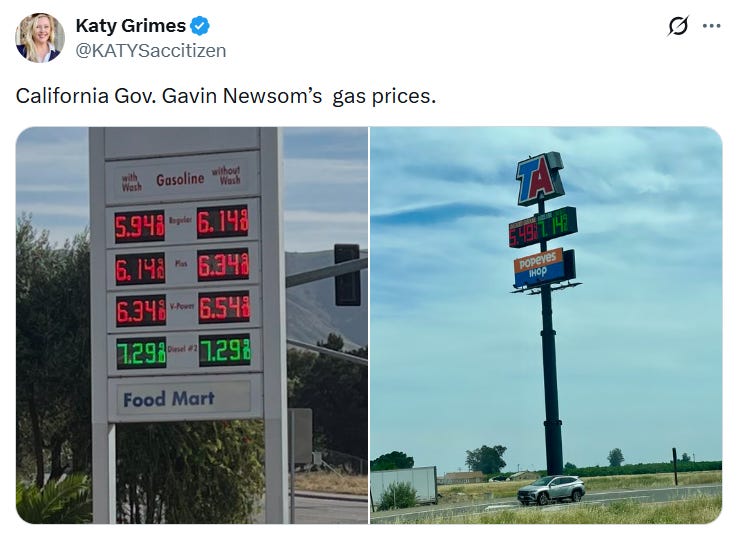
I don’t know what else to say besides the obvious: the fiction that a lot of people are clinging to like a security blanket is not going to survive contact with reality. The Right is in power now, it’s going to be judged for it, and these kinds of excuses are not going to hold any water. I can’t tell you what’s going to happen because it’s all still up in the air, but a fairly reasonable answer at this point is “nothing good.” This has been a catastrophic mistake, one that resulted from the rebirth of flawed assumptions of American unipolarity, exactly as I warned would happen. I am not saying this to be spiteful, or because I want the United States to fail, but because the only way that the United States (and the Right) was going to succeed was to avoid making these costly mistakes.
It is clear to see how this failure in Iran is linked to all of the heavy-handedness of the past year, and the mindset of both the administration itself and its base. In particular, no one learned a lesson from the tariffs, largely because they were rolled back, and thus many of the consequences never came to pass. But this allowed many on the Right to convince themselves that the danger was never real, and won’t be real here, now, in a situation that is exponentially worse and can’t be rolled back. I see people flaming Mr. STAR all the time over his tariff posts—which were extremely prescient, far more accurate than most anyone else—and it always comes down to this post-hoc rationalization that ignores the structural realities at play. But the strategy of ignoring those is inherently flawed, because eventually there’s going to come a point where you just won’t be able to, which is what’s happening right now. Right Wingers broadly tend to not understand economics and view it all as numbers up in the air. To put it plainly, oil is not an abstraction. It is a commodity that needs to be used, and the consequences of one fifth of the entire global supply being taken off the table are inescapable and already being felt.
It’s appalling that after all the years of bitching about the economic disaster of Covid, and after we all collectively experienced the failure of the Democrats that was due in large part to inflation and high gas prices in particular—something everyone understood and acknowledged a mere month ago—that many are now claiming it isn’t a problem and doesn’t matter. The idea that they are immune to the very forces and constraints which put them into power is horrifyingly insane. I feel crazy even talking about it, because this is not a recipe for anything other than self-sabotage.
One of the preferred tools of this weaponized ignorance is to respond to criticism with “what if you’re wrong” like a magic spell, or a child going “nuh-uh,” as though that alone is sufficient to invalidate it. But even if everything turns out alright—if Trump somehow turns this into a victory, even a decisive one—that does not invalidate most of the criticism surrounding this conflict. At most, it would speak to whether success was possible, not whether the underlying reasoning was sound.
Certain aspects of this situation are immutably true. Twenty percent of supply going down is bad for the global economy and America’s international position. Economic downturns are among the strongest predictors of political loss. The war was reckless and undertaken on faulty assumptions. Trump delegates too much on foreign policy and was sold a lie about an easy win by bad actors with mixed allegiances. There was no contingency for Iran’s grip on the Strait. American credibility is damaged by bad-faith tactics and an inability to protect its allies and the flow of trade. All true, regardless of the outcome. All good reasons for why this never should have happened. But just as with the tariffs, a favorable outcome would be used to rewrite the underlying reality.
The constraints would be ignored, the risks retroactively dismissed, and the same assumptions would be carried forward into the next crisis. This is the important point. The danger is not simply that this war goes badly, but that no lesson is learned, guaranteeing a repeat failure under even less favorable conditions. That process is already underway. There is a direct line from Ukraine, to Greenland, to the tariffs, and now Iran, with each episode reinforcing the same mindset and compounding into a larger failure. This is the template for how the Right fails, regardless of whether it’s this war specifically which determines MAGA’s prospects or not.
Pulled over on the side of the road to read this! Better write-up than anything churned out by the BBC. Reflecting on the 2003 Iraq invasion, in retrospect it would have been more fruitful as a ‘war of extermination.’ We really don’t need these people. Same with Iran. If there is anyone in the last 100 years I trust to wage a war- it’s Trump. If only because he’s so heartless and self-centered. Losing is simply not a consideration of his. Would he resort to nuclear weapons? Probably not, but it would be electrifying to finally see the full might of the US military in my lifetime. But that consideration is ceding the false notion that this war was necessary. If the blowback continues to escalate (linked to Trump’s inability to admit defeat) the MAGA movement is dead, the nu-right will dissipate, and the slow decline of America cannot be reversed without constitutionally illegal action. It feels like watching Hitler invade the USSR in real time, magnanimity and all. Shame.